
Iron Vein
Iron Vein
Section titled “Iron Vein”You taste it before you see it. The air near a rich iron deposit carries a metallic bite that settles on the back of your tongue, and compass needles swing wild and useless. The veins themselves bleed rust-red through surrounding stone like old wounds that never closed. Miners navigating these depths learn to work by torch-mark and memory, because no instrument will guide them true this far underground. The ore is dense, dark, and stubborn. It does not give itself up easily. Nothing worth having ever does.
Iron Vein
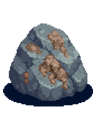
A dense iron ore deposit with rich metallic veins running through granite
- Type: resource_node
- Kind: iron ore
- Amount: 125 / 125
- Harvest Yield: 5 per action
- Harvest Time: 6.0s
- Harvestable: ✓ Yes
- Spawn Weight: 15 %
- Spawn Count: 8 per map
01K6VCVSRH21PSEXJKSGRC1JYG iron-vein Mining Notes
Section titled “Mining Notes”- Requires a reinforced pickaxe or better mining equipment. Standard tools buckle against the dense ore matrix.
- Yields 5 iron ore per extraction cycle
- Significantly longer harvest time due to ore density. Expect each strike to ring hard and progress slowly.
- Rare spawns make iron veins highly contested resources, and territorial disputes between mining companies are common
- Essential for crafting advanced tools and weapons, giving iron deposits strategic value as well as economic worth
- Deep veins often sit behind pockets of stale air or flooded passages. Bring ventilation supplies and be prepared to pump water.
Crafting Applications
Section titled “Crafting Applications”- Steel production: when smelted with carbon sources, iron ore produces steel for high-tier weapons, armor, and fortification hardware
- Tool forging: iron pickaxes, axes, and hammers represent a significant upgrade over bronze equivalents in both durability and cutting power
- Structural reinforcement: iron bands, nails, and brackets strengthen wooden constructions against siege and weather
- Chain and fasteners: iron chain is used for everything from drawbridges to prisoner restraints to ship anchors
Iron changed warfare. Before the first smiths learned to work it, battles were decided by numbers and terrain. Afterward, they were decided by whoever controlled the mines. The Iron Compact, a centuries-old treaty between the highland clans, still governs extraction rights in the deepest ranges. Breaking its terms is one of the few offenses that every faction agrees warrants execution. The Compact exists because the alternative was proven, bloodily, to be worse.
The deepest iron veins are said to hum. Not audibly. Miners describe it as a pressure behind the eyes, a vibration felt in the teeth and fingertips rather than heard. Old hands call it the Pulse and consider it a sign of exceptional ore purity. Scholars from the Arcanum theorize that dense iron deposits interact with subterranean ley lines, creating a low-frequency resonance that sensitive individuals can perceive. Whatever the explanation, miners who follow the Pulse tend to find the richest strikes. They also tend to develop headaches that no tonic can quite cure.