
Copper Vein
Copper Vein
Section titled “Copper Vein”The green gives it away. Long before a prospector’s hammer rings against ore, the turquoise staining on the surrounding granite tells the story: copper runs beneath this rock, and it runs deep. The veins themselves show as orange-brown seams threaded through grey stone, their surfaces streaked with vivid patina where moisture has crept in over the centuries. In mountainous country, you learn to read the color of cliff faces the way a sailor reads clouds. Green means copper. Green means money.
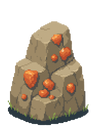
Copper Vein
A rich copper ore deposit embedded in rocky terrain
- Type: resource_node
- Kind: copper ore
- Amount: 75 / 75
- Harvest Yield: 3 per action
- Harvest Time: 4.0s
- Harvestable: ✓ Yes
- Spawn Weight: 25 %
- Spawn Count: 15 per map
01K6VMX51PRY6G9PD8WVGY5T5W copper-vein Mining Notes
Section titled “Mining Notes”- Requires a pickaxe or dedicated mining tool. Improvised implements shatter the ore into unusable fragments.
- Yields 3 copper ore per extraction cycle
- Takes longer to harvest than surface resources like timber, owing to the hardness of the host rock
- Limited spawn locations make copper deposits valuable and frequently contested between mining outfits
- Veins near the surface tend to be oxidized and lower purity. The best ore sits deeper, where the stone is still dark and the air smells of wet iron.
- Watch for unstable overhangs. Copper veins often form along fault lines where the rock is already fractured and waiting for an excuse to come down.
Crafting Applications
Section titled “Crafting Applications”- Bronze alloy: combined with tin, copper produces bronze for mid-tier weapons, armor fittings, and structural hardware
- Wiring and conduits: copper’s conductivity makes it essential for arcane circuit work and mana-channeling apparatus
- Coinage: the realm’s copper pieces are minted from smelted ore, and a steady supply keeps local economies moving
- Medicinal compounds: alchemists dissolve copper salts into antiseptic solutions and fungal treatments
Copper was the first metal that early civilizations learned to work. It remains the backbone of any settlement’s industry, the quiet metal that nobody celebrates and everybody needs. The great copper mines beneath the Ashfeld Range have operated continuously for over four centuries. Their tunnels descend so deep that miners report the walls are warm to the touch. Entire families have spent generations in those shafts, and the mining clans guard their claim maps with the same ferocity others reserve for heirlooms.
There is an old superstition that copper veins “bleed” before earthquakes. The green patina darkens to near-black in the hours before the ground shifts. Geologists dismiss this as changes in groundwater chemistry. The miners trust the color of the stone more than they trust any scholar’s reassurance. When the copper turns dark, the smart ones walk out of the tunnel and do not come back until the next morning.